
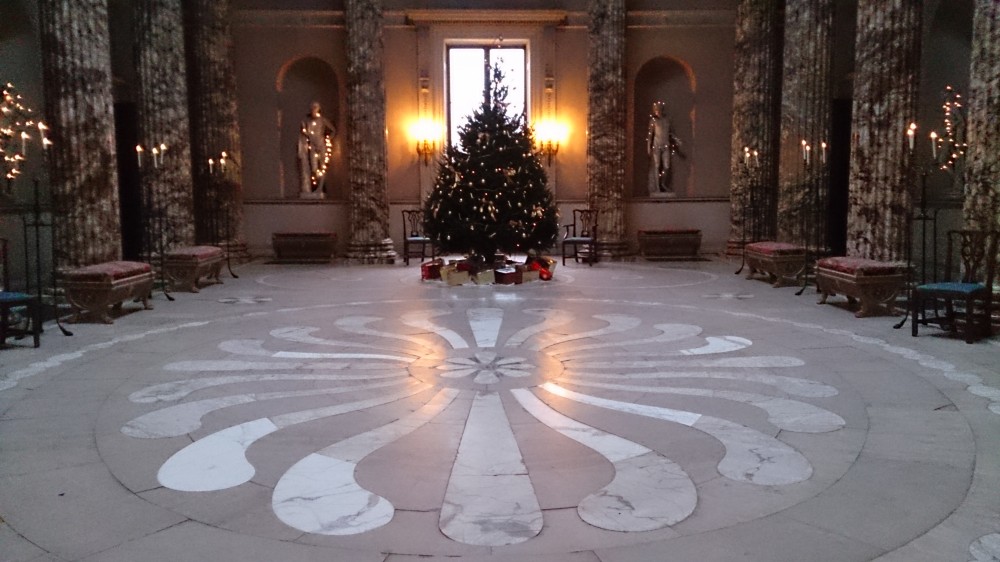
We had a wonderful, quiet Sunday morning (well, Cathy drove the sitter home while I chilled out with my baby on the couch!), then I happily took up Cathy on her offer to see Kedleston Hall, which is another of Derbyshire’s stately homes that features jaw-dropping Robert Adam architecture (perfectly preserved upstairs) and the wonderful Indian collection of the late Lord and Lady Curzon. The exhibit in the lower hall includes the spectacular Peacock Dress worn by Lady Curzon in 1902 to celebrate the coronation of King Edward VII. Cathy has an ongoing project to reproduce this amazing gown (and the ideas for its debut continue to percolate–oh, what fun!). The upstairs of Kedleston is resplendently Georgian and feels like stepping into a film set (all we lacked were the appropriate 18th-century costumes and fabulous towering wigs!). The photo (by Cathy) at the top is of The Marble Hall. It is absolutely stunning in person.


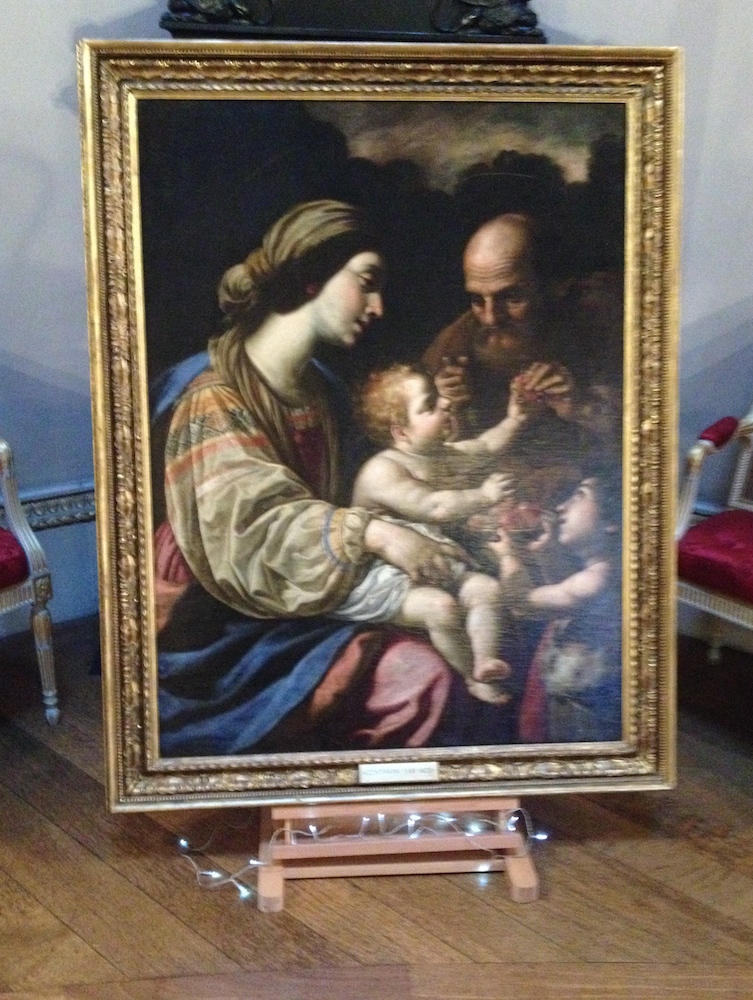
During parts of the year, certain rooms in the upstairs are closed to the public or are shrouded in semi-darkness to preserve paint and fabrics. This meant we wandered through the gloom in the anterooms, trying to let our eyes adjust so we could see the splendors before us. I would really love to return during another time of year to see these in all their glory!
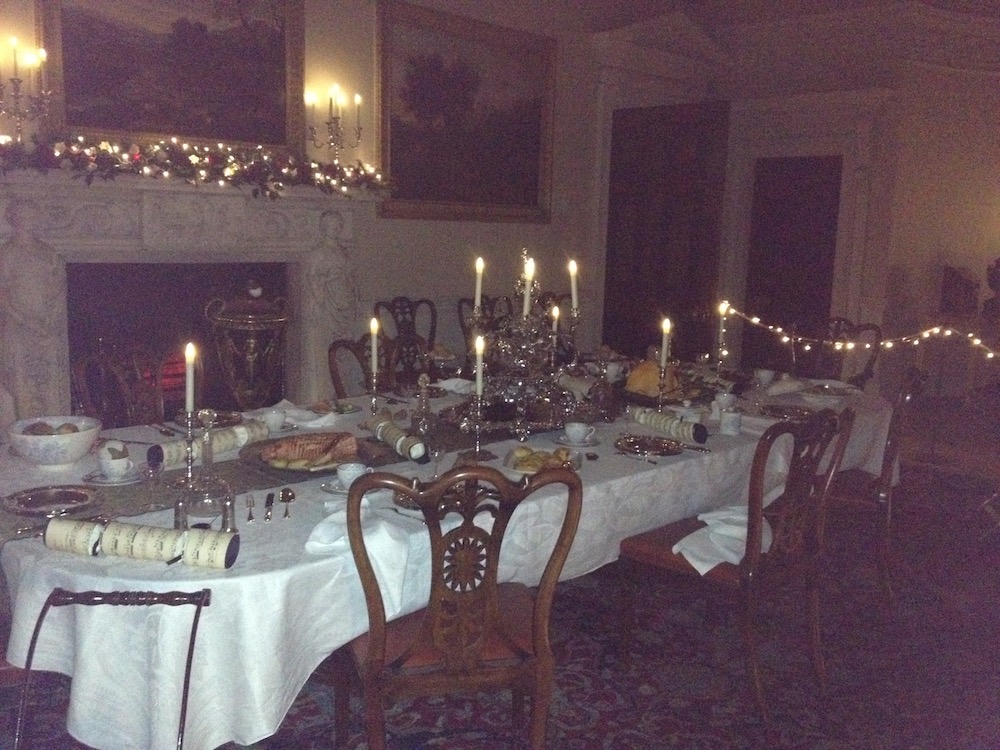


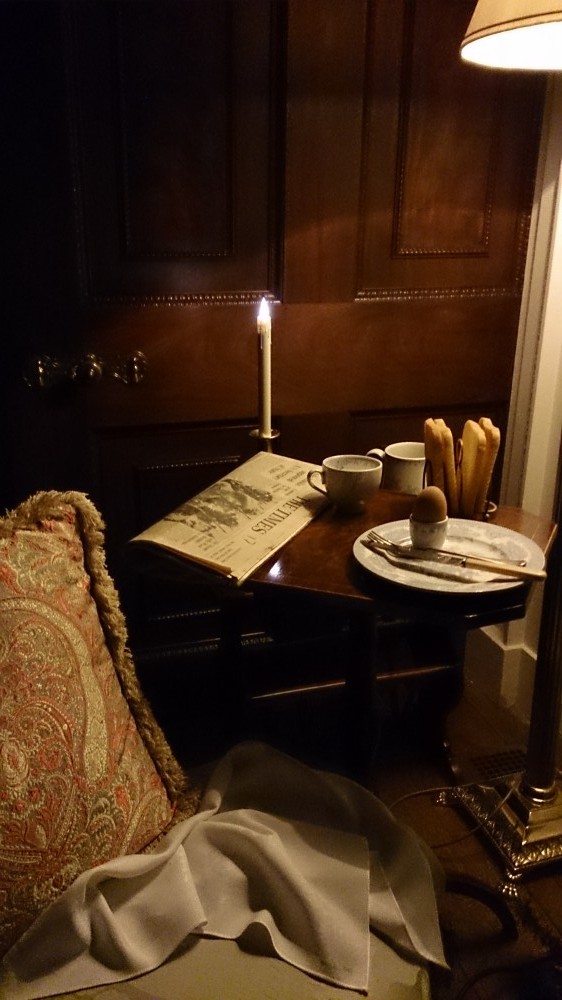
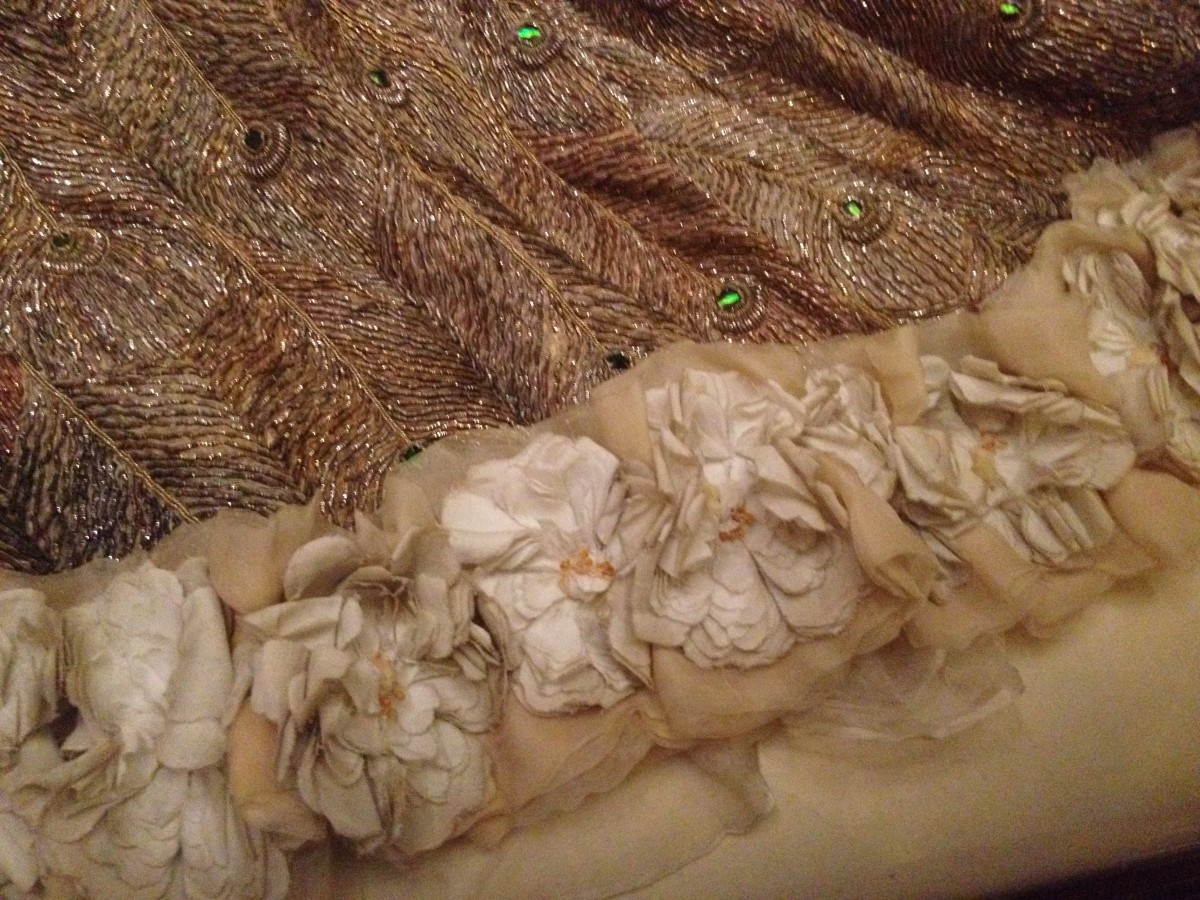
And now what you’ve really been waiting for … the famous Peacock Dress!


Here’ s a bit of the description of the embroidery and construction from Cathy’s site:
The embroidery itself is composed of gold and silver plated threads and wires, with a section of a beetle elytra (wing cover) forming each peacock feather eye.
The dress is often described as being made of “cloth of gold”, a term that has two meanings. It can mean a fabric literally woven using gold and silver threads, but in this case the second meaning is accurate: a fabric heavily embellished in goldwork embroidery.
The hem is accented with almost a hundred white silk roses. The original roses were replaced in the 1950s, according to records at the Museum of London.
Be sure to read Cathy’s site for all the juicy details — this is one jaw-dropping creation!
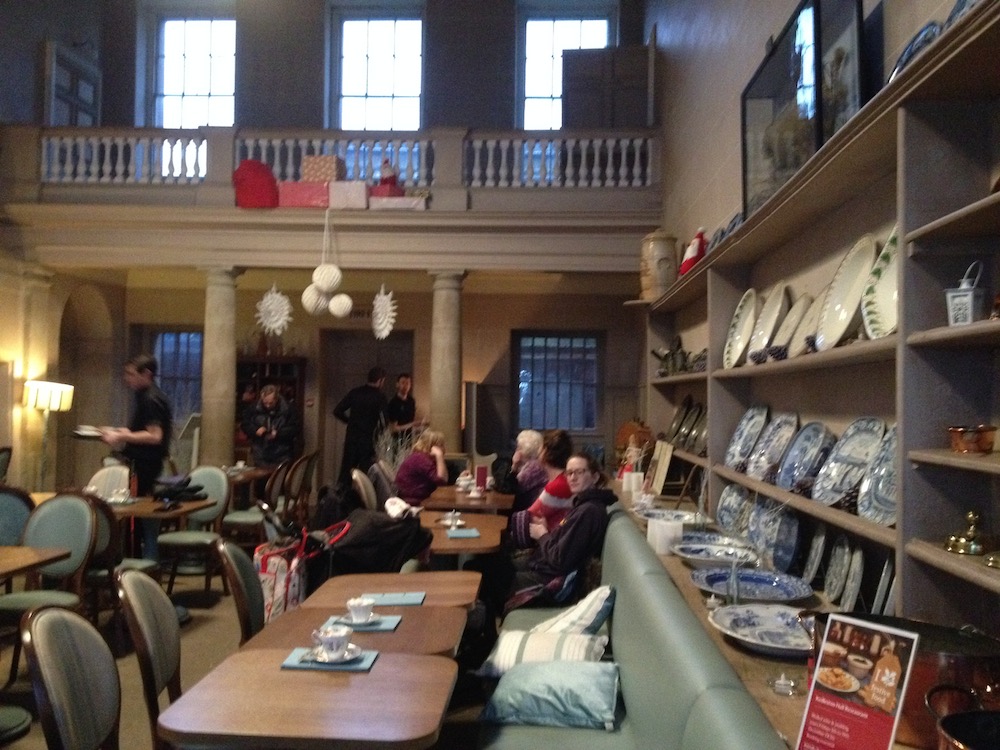
After enjoying our self-guided tour of the house, Cathy and I seated ourselves in the lovely restaurant (formerly the kitchen of the great house) to enjoy afternoon tea:
And before we left, we stepped into the Kedleston chapel to see Lady Curzon’s tomb. She and Lord Curzon had a happy marriage, and he was devastated when she died at the very young age of 36 (of failing health related to her many trips to India). Lord Curzon commissioned a beautiful tomb effigy of his wife (and his effigy was added later, after his death):

Here’s a bit on the history, which I found on The Story of a House: Mary Curzon, Vicereine of India:
The sculptor, Sir Bertram Mackennal, created a stunningly beautiful and touching effigy of Lady Curzon which, per her husband’s wishes “expressed as might be possible in marble, the pathos of his wife’s premature death and to make the sculpture emblematic of the deepest emotion.” Lord Curzon’s effigy was later added to lie beside that of his wife, as his remains do in the vault beneath.
It really is a moving piece of work, and the intimate chapel is just the right setting for it. Lady Mary left behind her a wonderful legacy of care of others as well (quoted from the same source):
Lady Curzon became a proponent of the artisans and manufacturers in India and wore Indian fabrics making them fashionable throughout India as well as London, Paris and the capitals of Europe. She placed orders for her friends and strangers alike, and assisted the silk weavers, embroiderers, and other artists to adapt their work to Western tastes and modern fashion. In addition, she helped revive native arts that had been all but forgotten, providing employment to many artisans.
She also had a strong interest in medical reform and led the movement to establish hospitals for women and appointing female doctors. The Lady Curzon Hospital in Bangalore is one of several established during her time in India.
A fitting end to a quiet Sunday. Next time I’ll share my photos from the Symington Collection at Snibston!
 Historical Fashion Tours with Sense & Sensibility